


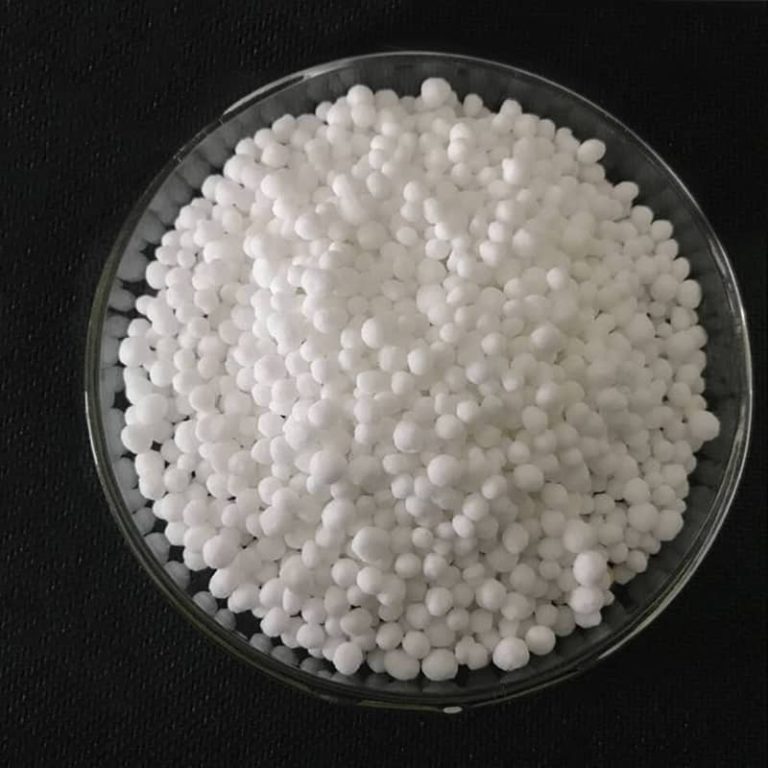
Urea Prill
Basic Information:
Chemical Formula: CO(NH2)2
Formula Weight: 60.06 g/mol
Water solubility(20 ºC): 1080 g/L
HS CODE: 3102100090
Place of Origin: China
Get Quote Now
Product Description:
Urea stands as the predominant solid nitrogen (N) fertilizer globally, offering substantial benefits for agricultural applications. Its prevalence in nature arises from its natural occurrence in the urine of animals. The high N concentration of urea facilitates its efficient transportation and application on fields.
Urea serves as a valuable nutrient source to satisfy the nitrogen requirements of plants. As it swiftly dissolves in water, surface-applied urea moves along with precipitation or irrigation to infiltrate the soil. Within the soil, urea freely migrates with soil water until undergoing hydrolysis, transforming into ammonium (NH4+). Diligence is imperative to minimize N losses to the atmosphere, surface water, and groundwater. Application of urea should be avoided when the fertilizer is expected to persist on the soil surface for prolonged durations, as undesired N losses can diminish crop yield and quality.
Urea exhibits advantageous attributes such as high N content, favorable storage characteristics, and minimal equipment corrosion. When managed appropriately, urea serves as an exceptional nitrogen source for plant nutrition.
Guaranteed Specifications: GB/T 2440-2017
Production:
The production process of urea fertilizer involves the controlled reaction of ammonia gas (NH3) and carbon dioxide (CO2) under elevated temperature and pressure conditions. The resulting molten urea is then shaped into spherical granules using specialized equipment for granulation or solidified into prills as it descends from a tower.
During the urea production process, unintended combination of two urea molecules can lead to the formation of a compound called biuret, which can be detrimental when applied directly to plant foliage. Commercial urea fertilizers typically contain minimal levels of biuret due to stringent control measures employed during manufacturing. However, specialized low-biuret urea variants are available for specific applications.
Urea manufacturing facilities are distributed worldwide, with a common tendency to be situated in proximity to ammonia (NH3) production plants, as ammonia serves as the primary input for urea synthesis. Urea is transported across the globe through various means such as ocean vessels, barges, railways, and trucks.
Applications:
1. Agricultural Use
Urea serves as a significant nitrogen (N) source for plant growth and is employed in diverse agricultural practices. The most common means of utilization involves blending urea with soil or applying it to the soil surface. Due to its high solubility, urea can be dissolved in water and delivered to the soil as a fluid fertilizer, mixed with irrigation water, or applied as a foliar spray, allowing for rapid absorption through plant leaves.
Upon contact with soil or plants, an intrinsic enzyme known as urease initiates the hydrolysis process, rapidly converting urea back into ammonia (NH3). This enzymatic reaction can result in gaseous losses of nitrogen as NH3, thereby necessitating the implementation of appropriate management techniques to minimize the loss of this valuable nutrient.
Urea hydrolysis occurs swiftly, typically within a few days following application. Although plants can directly utilize small amounts of urea as a nitrogen source, they more frequently rely on the ammonium (NH4+) and nitrate (NO3-) forms generated after urea transformation by urease and soil microorganisms.
2. Non-agricultural Uses
Urea finds widespread application across various industries. It is commonly utilized in power plants and diesel exhaust systems for the purpose of reducing emissions of nitrous oxide (NOx) gases. Additionally, urea can serve as a protein supplement in the diets of ruminant animals, such as cattle. Numerous industrial chemicals also rely on urea as a crucial component in their production processes.
*Source: “Nutrient Source Specifics” (No. 1), published by the International Plant Nutrition Institute.
Packaging:
We have successfully addressed the issue of fertilizer caking through enhancements made to the appearance and quality of packaging. These enhancements include adjustments to the thickness of inner bags, ensuring the tightness of bags, and optimizing the loading capacity of outer bags.
We possess the ability to provide a wide range of customized packaging options based on the specific requirements of our customers.
Options include:
– Laminated woven bags in 25 Kg/50 Kg sizes
– Bulk bags in 500 Kg/600 Kg/1000 Kg/1200 Kg capacities
– PE valve bags or PE heat-sealed bags in 20 Kg/25 Kg sizes
– Loose packaging or palletized options ranging from 20-27 MT capacity, suitable for container transport.