


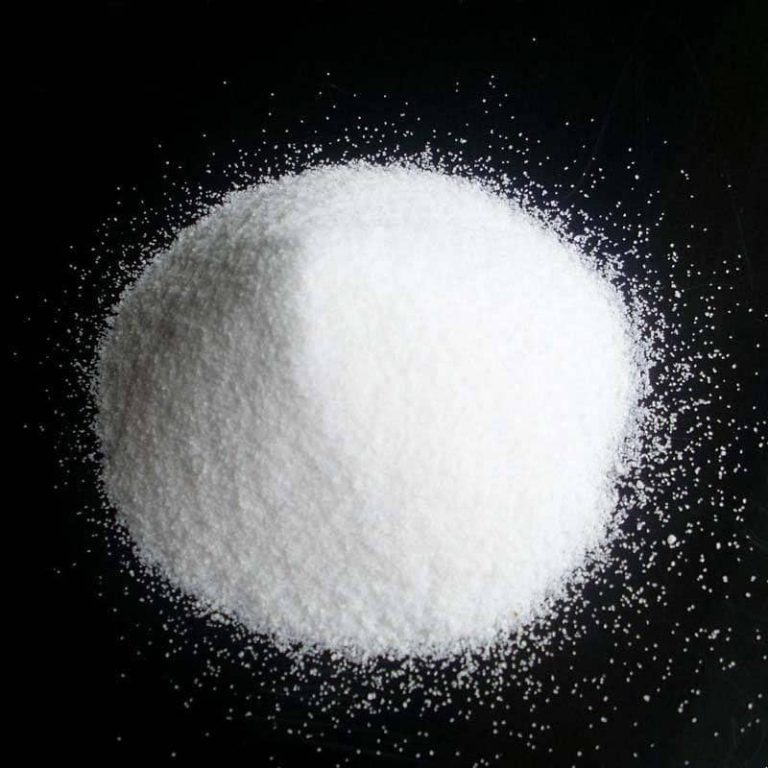
Mono Ammonium Phosphate (MAP)
Basic Information:
Chemical Formula: NH4H2PO4
Formula Weight: 115.03 g/mol
Water solubility(20 ºC): 370 g/L
Solution pH (1 g/100 mL): 4 ~ 5
HS CODE: 3105400000
Place of Origin: China
Get Quote Now
Product Description:
Monoammonium phosphate (MAP), alternatively referred to as ammonium phosphate monobasic or ammonium dihydrogen phosphate, presents as white crystals or powder. It boasts the highest phosphorus content among commonly used solid fertilizers and serves as an exceptional source of phosphorus (P) and nitrogen (N) for promoting high-yield and high-quality crop production.
Advantages:
MAP fertilizer offers several advantages due to its unique properties:
1. Water solubility: MAP is a highly water-soluble substance, allowing it to rapidly dissolve when exposed to moist soil. This enables efficient nutrient uptake by plants.
2. Essential ion supply: When dissolved in soil water, MAP provides both ammonium and phosphate ions, which play crucial roles in maintaining soil health and promoting plant growth.
3. Acidic nature: MAP fertilizer exhibits acidity, making it particularly beneficial for alkaline and neutral pH soil types. The acidic nature of MAP helps in counteracting the alkaline properties of such soils, enhancing nutrient availability to plants.
Guaranteed Specifications: HG/T 5048-2016
| Specifications | MAP 12-61-00 | ||
|---|---|---|---|
| Appearance | White Crystal | Pb | 0.0050%max |
| N+P2O5 | 73.0%min | As | 0.0200%max |
| N | 12.0%min | Cd | 0.0050%max |
| P2O5 | 61.0%min | Cr | 0.0050%max |
| Water Insoluble | 0.1%max | Hg | 0.0010%max |
| Moisture (H2O) | 0.3%max | ||
| pH(1 g/100 mL) | 4~5 |
Note: The content of Pb, As, Cd, Cr and Hg can be reached according to customer’s requirements.
Production:
The manufacturing process of Monoammonium phosphate (MAP) is relatively straightforward. In a commonly employed method, ammonia (NH3) and phosphoric acid (H3PO4) are reacted in a one-to-one ratio. The resulting MAP slurry is then solidified using a granulator. Alternatively, another method involves introducing the two starting materials into a pipe-cross reactor, where the reaction generates heat to evaporate water and subsequently solidify the MAP. Additional methods are also available.
An advantage of producing MAP is that it allows for the utilization of lower-grade phosphoric acid compared to other phosphorus (P) fertilizers, which often require higher purity acid grades. The phosphorus pentoxide (P2O5) equivalent content of MAP typically ranges from 48 to 61 percent, depending on the impurity levels present in the acid. The most commonly used fertilizer composition for MAP is 11-52-0, while a higher quality fertilizer composition can reach 12-61-0.
Applications:
Agricultural use:
Monoammonium phosphate (MAP) has long served as a vital granular fertilizer in agriculture. Its high solubility in water allows for rapid dissolution when applied to moist soil. Upon dissolution, the fertilizer separates into ammonium (NH4+) and phosphate (H2PO4-) ions, both of which are essential for promoting healthy and sustained plant growth. The surrounding solution’s pH becomes moderately acidic, making MAP particularly suitable for neutral- and high-pH soils. Agronomic studies indicate that, in most conditions, there are no significant differences in phosphorus (P) nutrition when comparing various commercial P fertilizers.
Farmers typically apply granular MAP by concentrated band placement beneath the soil surface near the plant roots or as surface bands. It is also regularly spread across fields and incorporated into the surface soil through tillage. In powdered form, MAP is an integral component of suspension fertilizers. MAP made with highly pure phosphoric acid (H3PO4) readily dissolves into a clear solution, making it suitable for foliar sprays or irrigation water additives. High-purity MAP usually contains a P2O5 equivalent content of 61 percent.
Non-agricultural uses:
In addition to agricultural applications, MAP finds usage in dry chemical fire extinguishers commonly found in commercial and residential locations. The fine powdered MAP is dispersed by the extinguisher spray, effectively coating the fuel and rapidly smothering the flame.
*Source: Nutrient Source Specfics (No. 9), International Plant Nutrition Institute.
Packaging:
We have successfully addressed the issue of fertilizer caking through rigorous improvements in the appearance and quality of our packaging solutions. These enhancements encompass the optimization of inner bag thickness, the tightness of bags, and the loading capacity of outer bags.
We take pride in offering a comprehensive range of customizable packaging options, tailored specifically to meet the individual requirements of our esteemed customers. Here are the available choices:
– Laminated woven bags in 25 Kg/50 Kg capacities.
– Bulk bags in weights of 500 Kg/600 Kg/1000 Kg/1200 Kg.
– PE Valve bags or PE heat-sealed bags ranging from 20 Kg to 25 Kg.
– Loose packaging or palletized options in containers, with a capacity ranging from 20-27 MT.